Designing for the Metaverse: Visual Identity in Immersive Digital Spaces
- Sinisa Zec Studio
- No Comments
- Graphic Design, UI/UX & Web Design
Everyone is talking about the metaverse as if it’s some far-off science fiction concept. It’s not. For designers, it’s a production problem that’s already on our doorstep. And I see most brands making the same mistake they made in the early days of the web: taking what works in one medium and just pasting it into another.
A flat logo floating in a 3D space is the modern equivalent of scanning a print ad and calling it a website. It’s a failure of imagination and a fundamental misunderstanding of the environment. It shows you haven’t thought about the medium.
Back when I started in a large-scale print shop, you learned fast that a design that looked good on screen was worthless if it couldn’t be produced. Ink bleeds, color profiles, plate alignment—that was the reality. The medium had rules. This is no different. Your canvas is no longer a 24-inch monitor or an A4 sheet of paper. It’s a traversable, interactive, multi-sensory world. The rules have changed completely.
The Flat Logo Is Dead (Again)
A brand identity is a system of assets that creates a consistent, recognizable experience. In 2D, that system includes a logo, typography, a color palette, and maybe some graphic elements. We put these into a PDF, call it a brand guide, and we’re done.
Not anymore.
In an immersive space, a user can walk around your logo. They can look at it from above, from below, maybe even walk *through* it. A 2D vector file doesn’t account for that. It has no back, no depth, no texture. It’s a facade. We have to stop thinking about brand identity as a set of flat graphics and start thinking about it as a kit of experiential parts.
What does your brand feel like to the touch? What does it sound like when you interact with it? How does it cast a shadow? These are the new brand guidelines.
This isn’t just about making things 3D. It’s about building a sensory language for a brand. For over 15 years, I’ve built identities for companies, from in-house work at places like Veritas Genetics to startups. The constant is that the identity has to *function* in its environment. The new environment is spatial.
The New Pillars of Immersive Identity
If the old pillars were logo, color, and type, the new ones are more physical. They’re principles borrowed from architecture, game design, and industrial design. Here’s how I break them down.
1. Volumetric and Spatial Presence
Your brand mark is no longer a static image; it’s an object. It occupies space. This means we have to design it in the round. When I’m working on 3D concepts in Blender, I’m not just extruding a logo. I’m asking questions:
- What is its form? Is it a solid sculpture, a hologram of light, a kinetic object that constantly changes shape?
- How does it relate to the architecture around it? Does it sit on a pedestal, hang from a ceiling, or emerge from a wall?
- Can a user interact with its volume? Can they push it? Does it react?
The brand’s presence becomes an architectural feature, a piece of the world itself. It’s not a sign on a wall; it might be the wall itself.
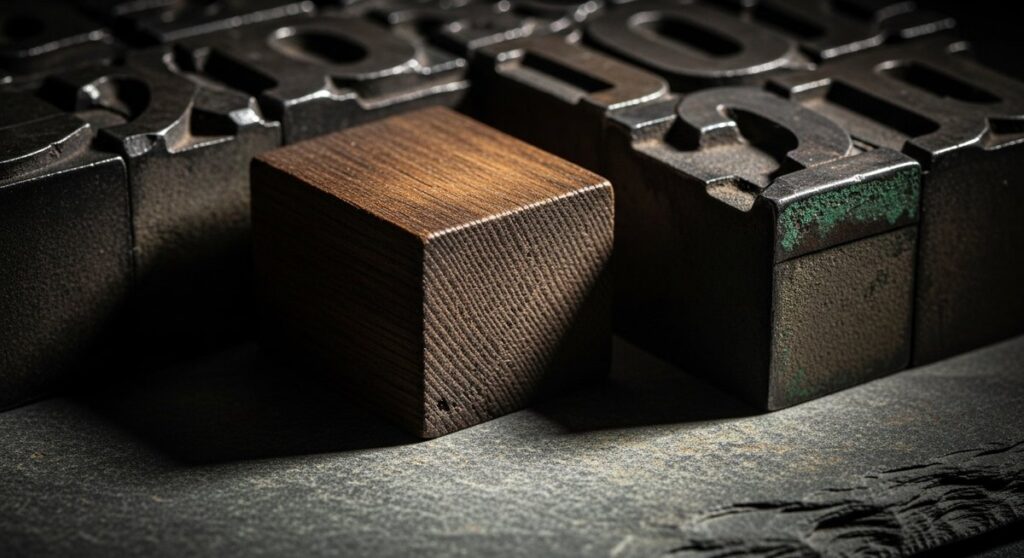
2. Materiality and Texture
This is where I think so much of modern design has failed. We’re in an era of soulless minimalism where every brand has stripped away texture and personality to become a flat, sterile shape. The metaverse is our chance to bring it back.
Instead of just picking a HEX code, you need to define a material library. Is your brand:
- Polished chrome and glass?
- Rough, weathered concrete and wood?
- Glowing, ethereal energy?
- Soft, sound-dampening fabric?
The choice of material communicates as much as color ever did. It implies weight, temperature, and value. My photography work is all about light. I spend hours in the studio with my Godox strobes and a Sigma 105mm macro lens just to see how light falls across a surface—the texture of paper, the weave of a fabric. We need to bring that same obsession with surface and light into our digital work. A brand’s material palette is its new color palette.
3. Motion and Interactivity
A static world is a dead world. How a brand identity moves and reacts to the user is now a core part of its personality. This is where UI/UX thinking comes in. When I prototype an app in Figma, every button needs a hover state, a pressed state, and an active state. The same applies to an immersive brand.
Does your brand signage pulse with a soft light as a user approaches? Does a floor pattern animate under their feet? Does an object emit a particle effect when touched? This reactive feedback is what makes a space feel alive and makes the brand feel responsive. It’s the difference between a static JPEG and a living entity.
4. Auditory Identity
Designers are visual thinkers. We almost always forget sound. In an immersive world, that’s a fatal flaw. Sound is 50% of the experience. What does your brand sound like?
This isn’t about a jingle. It’s about sonics. The sound of a door opening in a branded space. The subtle ambient hum of a virtual store. The confirmation chime when a user completes a purchase. These sounds build an entire layer of the brand experience that reinforces its character—is it futuristic and technical, or natural and calming? If you’re not designing the audio, you’re only designing half the brand.
Where I Land
-
Stop designing logos. Start designing worlds. Your job is now to create a cohesive sensory system—a kit of parts made of light, material, sound, and interaction.
-
Texture is the new personality. The rush to minimalist, flat design has made brands sterile. Immersive spaces are a chance to give brands back their physical character and soul.
-
If you’re a graphic designer who isn’t learning a 3D tool like Blender, you are going to be left behind. Prototyping in space is a non-negotiable skill for the next decade of branding.
Frequently Asked Questions
Do I need to be a 3D modeling expert to design for the metaverse?
Not an expert, but you need to be proficient. You must be able to prototype your ideas in 3D space to understand their volume and presence. Tools like Blender are free and essential to learn.
Is a static 2D logo completely useless in a virtual world?
Not useless, but it’s just one small piece. It can serve as the ‘seed’ for the 3D form, or be used in flat UI elements like menus, but it can no longer be the centerpiece of the entire brand identity.
What’s the biggest mistake designers make when approaching metaverse branding?
Thinking of it as just another screen. They design a 2D logo and just extrude it into 3D without considering materiality, interactivity, or how it feels as a spatial object from all angles.
{“@context”: “https://schema.org”, “@type”: “FAQPage”, “mainEntity”: [{“@type”: “Question”, “name”: “Do I need to be a 3D modeling expert to design for the metaverse?”, “acceptedAnswer”: {“@type”: “Answer”, “text”: “Not an expert, but you need to be proficient. You must be able to prototype your ideas in 3D space to understand their volume and presence. Tools like Blender are free and essential to learn.”}}, {“@type”: “Question”, “name”: “Is a static 2D logo completely useless in a virtual world?”, “acceptedAnswer”: {“@type”: “Answer”, “text”: “Not useless, but it’s just one small piece. It can serve as the ‘seed’ for the 3D form, or be used in flat UI elements like menus, but it can no longer be the centerpiece of the entire brand identity.”}}, {“@type”: “Question”, “name”: “What’s the biggest mistake designers make when approaching metaverse branding?”, “acceptedAnswer”: {“@type”: “Answer”, “text”: “Thinking of it as just another screen. They design a 2D logo and just extrude it into 3D without considering materiality, interactivity, or how it feels as a spatial object from all angles.”}}]}