The Psychology of Premium: Decoding Leica's Unrivaled Brand Loyalty
- Sinisa Zec Studio
- No Comments
- Branding & Identity, Graphic Design
The Short Answer: Leica’s loyalty isn’t built on superior specs; it’s a masterful blend of manufactured scarcity, deep-rooted heritage, and a tactile, minimalist experience that sells an identity, not just a product. Solo creatives can mimic this by focusing on a signature process, curating their client base, and building a brand that stands for something beyond the final deliverable.
Let’s get one thing straight. If you judge a camera on a spec sheet, a Leica often loses. My Nikon Z6 III has better autofocus, superior video capabilities, and a feature set that would make a Leica engineer blush. But nobody buys a Leica for the spec sheet. That’s the first, and most important, lesson.
They aren’t selling a tool to get a job done in the most efficient way possible. They are selling an experience. An idea. A philosophy. And people are not just buying it; they’re joining a tribe.
For over 15 years, I’ve built brands for clients and for my own studio. I started on a print shop floor, where a design was either right or it was garbage—no in-between. That production discipline taught me that what *feels* premium is often more important than what is technically perfect. Leica understands this better than anyone.
The Power of Saying “No”: Scarcity and Exclusivity
The simplest way to create desire is to make something difficult to obtain. Leica has mastered this. Their cameras are expensive—prohibitively so for many. Production runs are limited. Special editions are collector’s items before they even ship. This isn’t poor business planning; it’s calculated psychological warfare on consumerism.
By being exclusive, Leica creates an in-group. Owning one isn’t just about taking pictures; it’s a statement that you are part of a select few. This creates a powerful sense of belonging and validates the high cost. It’s the Veblen effect in action: a luxury good for which the demand increases as the price increases.
For the Solo Creative: Stop trying to be for everyone. Your brand becomes stronger when you define who you are *not* for. Don’t be afraid to have a higher price point and a waiting list. Scarcity signals quality. When you’re available to anyone at any time for a low price, the unspoken message is that your time and skill aren’t valuable.
Selling a Legend: Heritage as a Feature
When you buy a Leica, you’re buying into the legacy of Henri Cartier-Bresson and the “decisive moment.” You’re buying a piece of the history of 35mm photography. The company doesn’t just sell cameras; it curates its own mythology. The weight of that history is baked into every solid, brass-topped body they produce.
They don’t need to shout about the latest sensor tech because they can whisper about the legends who used their gear. This is storytelling as a core brand pillar. Read more about the master himself on the official Magnum Photos website; it’s a lesson in brand association.
For the Solo Creative: What’s your story? My story starts in a loud, ink-stained print shop. That’s my heritage. It informs how I design—for the real world, not just a screen. You need to find your own story. Maybe it’s a unique process, a specific aesthetic you’ve perfected, or a philosophy that guides your work. Don’t just show your portfolio; tell people *why* you create the way you do.
The Religion of Simplicity: The Anti-Feature
In an industry obsessed with adding more—more buttons, more menu pages, more focus modes—Leica dares to take things away. A typical Leica M-series camera is a study in purposeful limitation. Shutter speed dial. Aperture ring. Manual focus tab. That’s it.
I’ve definitely made the mistake of getting a new camera and spending the first hour just trying to find the AF settings in a labyrinth of menus. Leica removes that friction. This isn’t the soulless, empty minimalism I see ruining brand design everywhere. This is minimalism with a purpose. It forces the photographer to slow down, to be deliberate, and to engage with the core principles of light and composition. The camera gets out of the way.
The experience of using it—the heavy click of the shutter, the smooth turn of the focus ring—is the product. The photos are almost a byproduct.
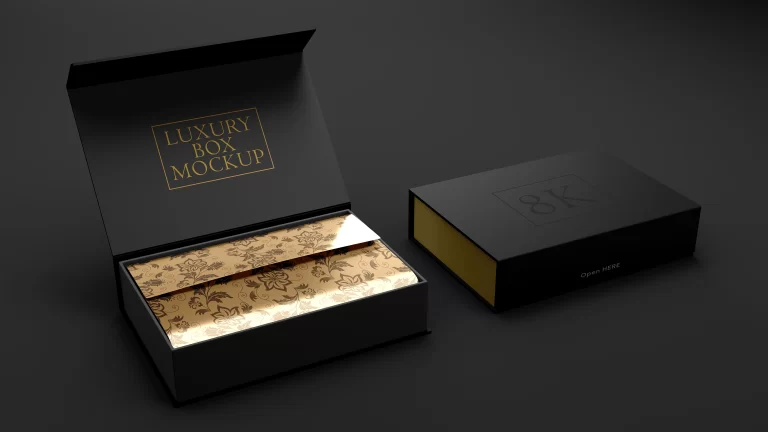
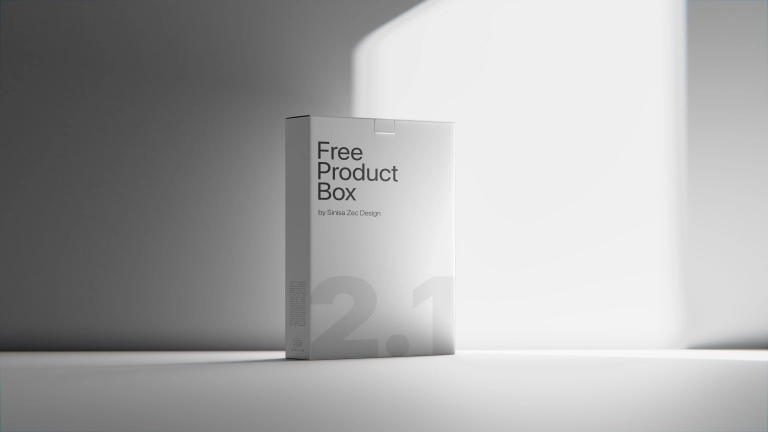
For the Solo Creative: What can you strip away from your process to make it more focused and unique? Instead of offering 20 services, what if you offered only two, executed at a world-class level? Your process *is* a product. Refine it, simplify it, and sell it as a core part of your brand experience. Maybe that means presenting your final brand concepts in a beautiful Luxury Box Mockup instead of just emailing a PDF. The delivery is part of the experience.
The Halo Effect of the Red Dot
That little red circle is one of the most powerful logos in the world. It requires no text. It communicates history, quality, craftsmanship, and status in a single glance. It creates a ‘halo effect,’ where the positive association with the brand transfers to the person holding the camera.
The brand is so strong that it elevates the user. This is the end goal of any premium branding effort: to make the customer feel like a better version of themselves simply by associating with you.
For the Solo Creative: Your logo and visual identity are not decoration. They are your red dot. They are the shortcut to everything you stand for. Invest in a brand identity that is timeless, confident, and reflective of the premium value you provide. It’s the first and last thing a client sees.
The Bottom Line
- Premium is a feeling, not a feature list. Leica proves that how your product or service makes a client feel about themselves is more powerful than any technical specification.
- Your story is your differentiator. In a crowded market, the ‘why’ and ‘how’ behind your work are what clients buy into. Don’t just be a service provider; be a brand with a point of view.
- Don’t be afraid to be exclusive. The most powerful brands are not for everyone. Define your ideal client, charge what you’re worth, and have the confidence to say no to the rest. Scarcity builds desire.
Photo by lan mcqueen on Unsplash.
Frequently Asked Questions
Can a new solo creative really use scarcity without alienating potential clients?
Yes. Scarcity isn’t just about a waiting list. It’s about positioning. Frame your services as a limited, high-touch offering from the start. It signals that you prioritize quality over quantity, which attracts the right kind of clients.
Is building a premium brand just about charging high prices?
No. The price is a result of the brand, not the cause of it. You must first build the value through your story, your process, and the client experience. The high price then becomes a logical confirmation of that value, not an arbitrary number.
How do I build a ‘heritage’ if I’m just starting out?
Your heritage is your unique point of view and your origin story. It doesn’t have to be decades long. My print-shop background is my heritage. A background in architecture, a passion for vintage film, a unique creative process—that’s your story. Own it and tell it consistently.