NVIDIA's 1-Petaflop RTX Spark: Is This Windows AI Superchip Actually *Too Powerful* for the Solo Premium Designer's Reality in 2026?
- Sinisa Zec Studio
- No Comments
- Gear & Equipment, Photography
I’m not impressed by big numbers. I’m impressed by what works. When I started my career on the floor of a print shop, we produced incredible work with a fraction of the power we have today. The bottleneck was never the machine; it was the idea, the strategy, and the time it took to get a proof approved. Not much has changed.
The Short Answer: A 1-petaflop GPU for a solo designer is not just overkill; it’s a profound misunderstanding of our reality. It’s a solution engineered for a problem we don’t have, wrapped in a marketing narrative that mistakes raw computation for creative efficiency.
The Petaflop Problem
Let’s be blunt. A petaflop is a quadrillion operations per second. That’s supercomputer territory, the kind of power used for climate modeling or large-scale physics simulations. To put it in perspective, NVIDIA’s own RTX 4090, a beast of a card that handles every professional design task I can throw at it, operates in the realm of teraflops—and it takes a thousand teraflops to equal one petaflop. The RTX 4090 delivers around 83 teraflops. This new chip offers more than ten times that power. For what, exactly? To make a gradient in Adobe Illustrator 0.001 seconds faster?
My daily workflow lives inside Adobe Illustrator, Photoshop, Figma, and occasionally Blender. These are demanding programs, but they aren’t petaflop-demanding. The most common AI tasks for designers today involve automating repetitive work—background removal, intelligent resizing, or generative fill to expand a photo’s canvas. These are incredible time-savers, but they run beautifully on existing hardware. The promise of a petaflop isn’t about assisting a human; it’s about replacing them—a philosophy I fundamentally reject. AI is a tool in my belt, not the artist at my desk.
Diminishing Returns and Real-World Bottlenecks
Let’s talk about money and resources, because as solo creatives, that’s the conversation that matters. A chip this powerful will inevitably come with an astronomical price tag. It will also demand a specialized ecosystem. A high-end GPU like an RTX 4090 already has a TDP of 450W, requiring a robust power supply in the 850W-1000W range and serious case cooling to manage the heat. A 1-petaflop consumer card would push this to an extreme, demanding workstation-level cooling and power infrastructure that most home studios simply aren’t equipped for. And that’s a recurring cost on your electricity bill.
The real bottlenecks in my studio aren’t computational. They are human.
- Client communication and feedback cycles.
- Market research and brand strategy development.
- My own creative energy and focus.
- Finding the right light for a photoshoot with my Nikon Z6 III.
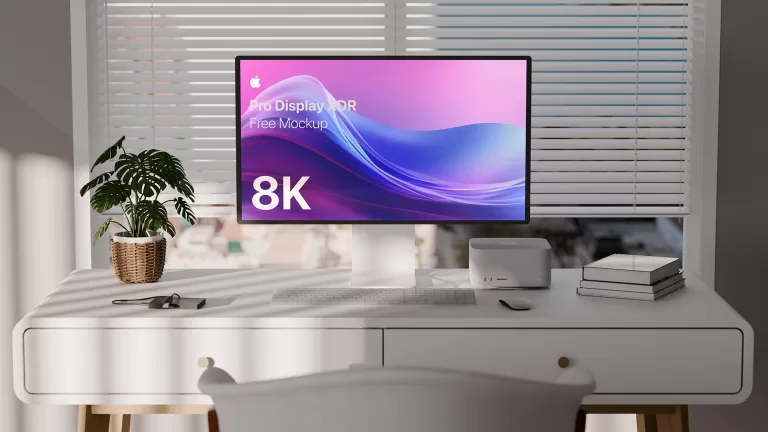
No amount of processing power solves these problems. For the cost of this theoretical RTX Spark, I could invest in things that provide a tangible return: a color-calibrated Pro Display XDR, a faster server for my website, a subscription to a better project management tool, or simply taking a month off to learn a new skill. That’s a smarter investment than buying a drag racer to drive to the grocery store.
Craft Over Computation
There’s a dangerous trend in the creative world, fueled by marketing, that new technology is a substitute for skill. It’s the same logic that makes amateur photographers fixate on camera bodies while ignoring light and composition. I’ve built my 15-year career on the principle that the craft comes first. The thinking behind the design is more important than the tool that executes it.
This RTX Spark feels like the ultimate expression of the opposite view. It’s for generating, not creating. It’s for volume, not intent. For the solo premium designer, whose value is tied directly to their unique vision and strategic input, this isn’t just unnecessary—it’s a distraction.
The Bottom Line
- It’s a Mismatch for the Job: A petaflop of power is designed for large-scale AI model training, not the targeted AI-assist tasks that actually help designers. For our workflow in the Adobe Creative Cloud, it’s like using a sledgehammer to crack a nut.
- The Total Cost of Ownership is Too High: Beyond the initial price, the power, cooling, and infrastructure requirements make it an impractical and inefficient investment for a small independent studio.
- It Prioritizes the Wrong Things: Our value is in our creativity, strategy, and problem-solving. Investing in gear that encourages us to outsource those skills to a machine is a step in the wrong direction.
Photo by Siednji Leon on Unsplash.