Canon C50's Major Firmware Update: Did it Just Unlock Pro-Level Features That Solo Filmmakers Can't Ignore in 2026?
- Sinisa Zec Studio
- No Comments
- News, Photography
Most of the time, I ignore firmware news. It’s a footnote. A fix for an obscure bug that affects three people. But every once in a while, an update lands that isn’t about fixing what’s broken, but about fundamentally improving how you work in the field. Canon just dropped firmware version 1.0.4.1 for its Cinema EOS C50, and we need to talk about it.
The Short Answer: No, this update doesn’t magically add 8K RAW or a new sensor. What it does is far more practical—it significantly enhances remote operational control that directly addresses the pain points of solo operators, especially those of us wrestling with gimbals and complex rigs.
What Actually Changed? The No-Nonsense Breakdown
I’ve spent over 15 years in this industry, starting from the prepress floor of a print shop, and I’ve learned to value practical tools over flashy specs. This update delivers on that practicality. Let’s get to what matters.
The Real Headline: USB-C Gimbal Control
This is it. This is the one feature that makes the whole update worth discussing. The firmware enables external control of recording, AF, focus, iris, shutter, and ISO over USB-C. For anyone who has ever balanced a camera on a gimbal like my Zhiyun Crane 4, you know the frustration. You get the shot perfectly framed, the balance is perfect, and then you realize you need to bump the ISO or tweak the aperture. You’re faced with either messing up the balance to touch the camera or relying on flimsy, often proprietary, control cables.
Not anymore.
Direct USB-C control is a clean, universal solution. It means you can mount the C50, plug in one standard cable to your gimbal’s handle, and adjust core settings without ever touching the camera body. For a solo filmmaker trying to pull focus, manage exposure, and execute a smooth camera move all at once, this isn’t a small thing. It’s a massive workflow improvement that reduces points of failure and speeds up your shoot.
Smoother Digital Zoom: Use With Caution
The update adds an “Ease In / Ease Out” setting to the digital zoom. Let’s be clear: I’m a prime lens shooter. I believe in moving my feet, not punching in on pixels. Digital zoom always degrades image quality. But I’m also a pragmatist. Sometimes you just need a slow, subtle push-in for an interview or a product shot, and swapping lenses isn’t an option. This easing function makes that necessary compromise look less jarring, more intentional. It’s an emergency tool, now a slightly more refined one.
Better Streaming and a Smarter Interface
Canon also improved the reliability of SRT (Secure Reliable Transport) protocol streaming. For solo operators doing live events or remote broadcasting, the new automatic reconnection feature is a welcome safety net. It’s a niche feature, but a critical one for that niche. More universally useful is the small UI tweak: the level indicator now changes color when the camera is perfectly level. It sounds trivial, but how many times have you squinted at a tiny bubble level on a tripod head? It’s a small change that saves seconds, and those seconds add up over a long shoot day.
Canon C50: A Quick Refresher
For those unfamiliar, the C50 is Canon’s compact full-frame cinema camera, launched in late 2025 for about $3900. It offers impressive specs with its 3:2 Open Gate sensor, 12-bit Cinema RAW Light internal recording, and the legendary Dual Pixel AF II. It’s built for hybrid shooters and small crews needing cinematic quality in a small footprint.
Its biggest weakness? No in-body image stabilization (IBIS). As a Nikon shooter, I’ve come to rely on IBIS, but its absence in the C50 makes the new gimbal control feature even more critical. You *need* a gimbal or a tripod for this camera, and this firmware makes using one much less of a chore.
Technical Specifications: The Canon Cinema EOS C50
| Feature | Specification |
|---|---|
| Sensor Type | 3:2 Full Frame CMOS sensor (35.9 x 23.9mm) |
| Total Pixels | Approx. 34.20 megapixels |
| Effective Pixels (Video) | Approx. 32.373 megapixels (6968 x 4646) |
| Processor | Digic DV 7 |
| Lens Mount | Canon RF |
| Dual Base ISO | 800 / 6400 (Log/RAW), 400 / 3200 (709 profiles) |
| Dynamic Range | 15+ stops (Full Frame), up to 16 stops (Super 35mm) |
| Image Stabilization | No in-body image stabilization (Lens or Digital IS only) |
| Internal RAW | 12-Bit Cinema RAW Light: 6960 x 4640 up to 29.97 fps, 6960 x 3672 up to 59.94 fps |
| Internal Codecs | XF-HEVC S (4:2:2/4:2:0 10-Bit), XF-AVC (4:2:2 10-Bit), H.264/MPEG-4 (4:2:2 10-Bit / 4:2:0 8-Bit) |
| High Frame Rates | 7K up to 60P, 5K (crop) up to 60P, 4K up to 120P, FullHD up to 180P |
| Sensor Modes | 3:2 Open Gate Sensor Mode (up to 4K120, 7K60 raw) |
| Anamorphic Support | Desqueeze at 1.3x, 1.5x, 1.8x, 2x |
| Autofocus | Dual Pixel CMOS AF II with EOS iTR AF X (People, Animals, Vehicles) |
| Shutter | Electronic only |
| Display | 3” 1.04m dot articulating touch-screen LCD |
| Storage | 1x CFexpress Type B, 1x UHS-II SD |
| Connectivity | Wi-Fi, USB-C (USB3.2 Gen2), HDMI (Type-A), 3.5mm Mic, 3.5mm Headphone, Time Code (DIN1.0/2.3), Remote (2.5mm) |
| Audio | 2x XLR via optional Handle Unit |
| Streaming | UVC/UAC, IP Streaming (SRT), XC Protocol |
| Other Features | Frame.io C2C, Vertical Video, Simultaneous Crop Recording, User LUTs |
| Battery | LP-E6P (Approx. 90-100 mins) |
| Cooling | Fan-based cooling system |
| Dimensions | 143 x 88 x 95 mm (5.6 x 3.5 x 3.7 in) |
| Weight | 670g (1.48 lb) body only |
| Price (MSRP) | US$3900 |
Check Current Prices & Availability
Gear pricing fluctuates constantly. If you are seriously considering adding this to your kit, check the current retail stock and pricing through the links below:
My Verdict
- The enhanced USB-C external control is the single most important part of this update. For solo filmmakers using gimbals, it’s a genuine workflow revolution that removes a massive point of friction.
- This update isn’t about adding headline-grabbing specs. It’s a practical update, refining the camera into a better real-world tool. It’s about refinement, not revolution.
- Canon’s continued support with meaningful updates like this (and the previous 1.0.3.1 fix for RAW issues) is a strong signal of their commitment to the platform, which is exactly what you want to see after spending nearly four grand on a camera body.
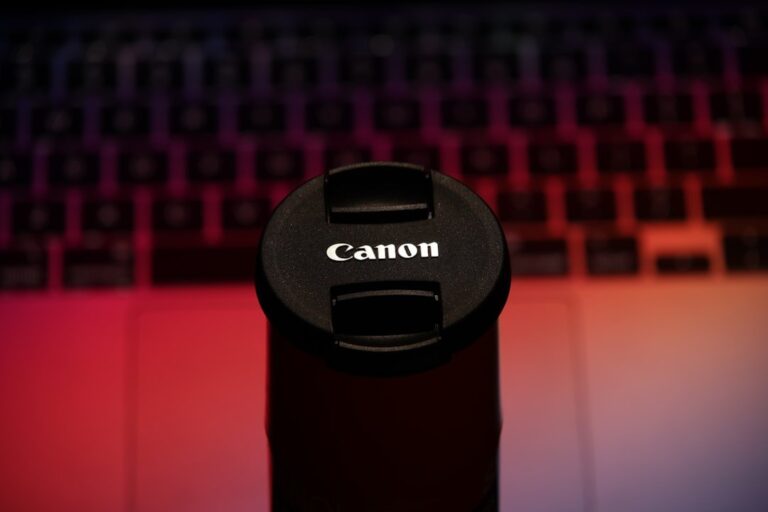
Photo by Oscar Ivan Esquivel Arteaga on Unsplash.