From 'Good' to 'Great': The Business Advantage of Deep Customer Understanding in Premium Graphic Design
- Sinisa Zec Studio
- No Comments
- Graphic Design, The Design Business
The Difference Between an Order-Taker and a Partner
Let’s be blunt. A client comes to you and says, “I need a clean, modern logo.” You fire up Illustrator, pick a slick sans-serif, use some clever negative space, and deliver a file package. The client says, “Perfect, thank you.” You get paid. The project is ‘good’.
But six months later, their startup is still struggling to get noticed. Your ‘good’ logo did nothing because ‘clean and modern’ wasn’t a business strategy. It was a vague aesthetic preference. You were an order-taker. A pair of hands. This is the trap that leads to the soulless, sterile, minimalist design I see plaguing 90% of brands today. It’s safe, it’s clean, and it’s utterly forgettable.
- Key Takeaway 1: Surface-level briefs lead to forgettable, ‘good enough’ design that doesn’t solve a real problem.
- Key Takeaway 2: Deep understanding uncovers the actual business challenge, not just the client’s stated request.
- Key Takeaway 3: This shift makes your work indispensable, justifies premium rates, and builds lasting client partnerships.
The Four Levels of Customer Understanding
To break out of the order-taker cycle, you have to dig. You have to become a detective. Over my 10+ years in this business, I’ve learned that every client request operates on four levels. Most designers never get past the first two.
Level 1: The Surface Request.
This is what they say they want. “I need a new website.” “We need a brochure for the trade show.” It’s a deliverable. It’s the easiest thing to hear and the easiest thing to execute. It’s also the least valuable.
Level 2: The Implied Need.
This is the problem they think they have. “My current website looks dated and isn’t getting traffic.” “Our competitors all have fancy brochures.” They are identifying a symptom, not the disease.
Level 3: The Business Problem.
This is the real commercial pain point. “We’re losing sales to competitors with better online presences, and our lead generation is flat.” “Our sales team feels unprepared at trade shows and can’t communicate our value effectively, costing us contracts.” Now we’re talking. This is a problem you can solve with strategic design.
Level 4: The Human Aspiration.
This is the gold. “I’m stressed about the company’s future, and I’m worried I can’t provide for my team.” “I feel embarrassed handing out our current materials.” This is the emotional driver behind the business problem. When a client trusts you with this, you have the key to creating work that doesn’t just perform, but resonates on a human level.
Your job isn’t to design a website. Your job is to solve the lead generation problem so the founder can sleep at night. The website is just the tool you use to do it.
How to Ask Questions That Matter
Getting to Levels 3 and 4 requires you to stop asking about colors and fonts in the first meeting. You have to ask better questions. Harder questions.
Instead of: “What are some logos you like?”
Ask: “If this project is a massive success one year from now, what has tangibly changed for your business?”
Instead of: “What’s the call to action?”
Ask: “What is the single most important action you want a customer to take? And what’s stopping them from doing it now?”
Here’s one of my favorites:
“Who is your worst possible customer? Who are we actively trying to repel with this design?”
This line of questioning does two things. It positions you as a strategic thinker, not just a pixel-pusher. And it gives you a strategic foundation for every creative decision. The color palette isn’t just ‘bold’; it’s chosen to attract high-value clients and repel tire-kickers. The typography isn’t just ‘elegant’; it’s chosen to convey the stability that their anxious customers are looking for.
It’s like photography. I shoot with Nikon because I trust the tool, the durability, the color science. But the camera doesn’t make the photo. My understanding of light, angle, and the story I’m trying to tell—that’s what creates the image. Your design software is your camera. Your deep understanding of the client is your light and composition.
The Payoff: Justifying Your Premium Value
When you operate at this level, you’re no longer selling hours or deliverables. You’re selling outcomes. You can confidently charge premium rates because the value you provide is tied to business growth, not just aesthetic polish. You’re not an expense; you’re an investment.
This is also how you escape the creative rut. When your design is anchored in strategy, you can push back against pointless feedback and propose bold, effective solutions. You can bring back color and soul into a world of sterile design because you can prove it works.
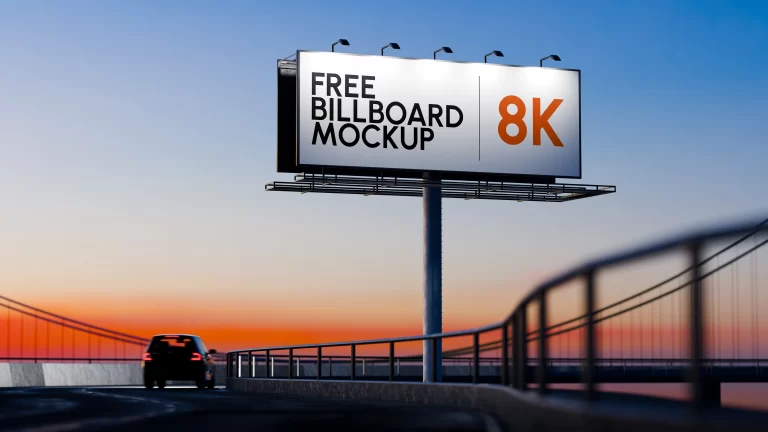
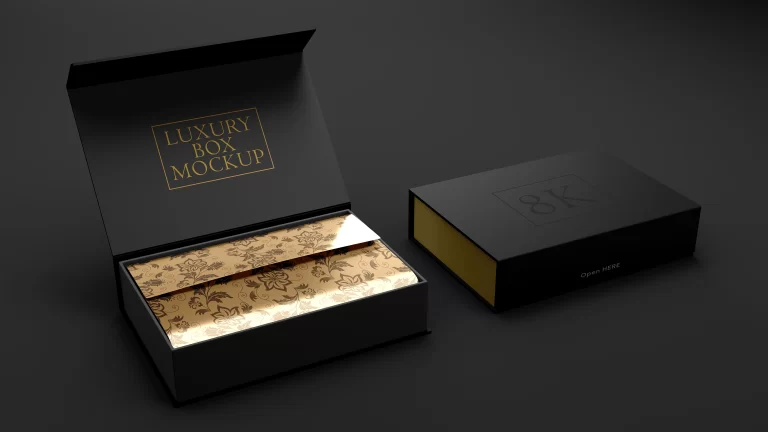
Once you have that solid strategy, you need to present it with conviction. Show the client the future. That’s why I create resources like the free, high-resolution 8K PSD mockups on my studio site. They allow you to present your strategic design not as a flat JPEG, but as a tangible reality—on a billboard, a luxury package, or a phone screen. It makes the solution undeniable.
So stop being a ‘good’ designer. Be a detective. Be a strategist. Dig until you find the real problem, and then solve the hell out of it. That’s how you create work that lasts.