Samyang/Schneider AF 60-180mm f/2.8 FE: The Mid-Range Telephoto That Could Dethrone Sony's GMs (If You Can Live Without 70-200mm)?
- Sinisa Zec Studio
- No Comments
- News, Photography
I’ve built my career on workhorse lenses. The tools that just show up and deliver, day in, day out. For most of the industry, the 70-200mm f/2.8 is that lens. It’s predictable. It’s reliable. And it’s been fundamentally unchanged for decades. So when a company decides to challenge that standard, not by beating it, but by changing the rules, I pay attention.
The Short Answer: This Samyang/Schneider lens is a calculated gamble. It sacrifices 20mm of reach to gain 10mm at the wide end, likely hitting a much lower price point than Sony’s G Master. For portrait, event, or studio pros who rarely push to 200mm, this could be a smarter, more affordable workhorse.
Samyang, in partnership with the legendary German optics house Schneider Kreuznach, just pulled the wraps off their AF 60-180mm f/2.8 FE. It’s the third lens in their f/2.8 zoom trilogy for Sony E-mount and L-Mount, and it’s clearly designed to disrupt the most established professional zoom on the market. The promise is simple: ‘Lighter. Faster. Closer.’ And while two of those claims seem plausible based on the specs, it’s the focal range that will make or break this lens for working photographers.
Technical Specifications
Let’s put the raw numbers side-by-side. Specs don’t tell the whole story, but they’re the foundation of any professional tool. I’ve put the known details against Sony’s reigning champion, the FE 70-200mm f/2.8 GM OSS II.
| Specification | Samyang/Schneider AF 60-180mm f/2.8 FE | Sony FE 70-200mm f/2.8 GM OSS II |
|---|---|---|
| Focal Length | 60–180mm | 70–200mm |
| Maximum Aperture | f/2.8 (Constant) | f/2.8 (Constant) |
| Mount | Sony E, L-Mount | Sony E |
| Minimum Focus Distance | 0.35 m (at 60mm) to 0.78 m (at 180mm) | 0.4 m (at 70mm) to 0.82 m (at 200mm) |
| Optical Stabilization | Not specified (Likely relies on IBIS) | Yes, Optical SteadyShot (OSS) |
| Filter Thread | 77mm | 77mm |
| Weight | Unconfirmed (Reportedly compact & light) | 1045 g (without tripod foot) |
| Dimensions | Unconfirmed | 88 x 200 mm |
| Controls | AF/MF Switch, Fn Button, Zoom Lock | Aperture Ring, AF/MF, Full-Time DMF, Focus Limiter, OSS Switch, Iris Lock |
Does the Trade-Off Actually Work?
Here’s the blunt truth. Losing 20mm at the long end hurts. Anyone who says otherwise hasn’t missed a critical headshot at an event because they couldn’t punch in just that little bit more. I’ve been there. You end up cropping in post, and it’s never the same. For sports or certain types of wildlife photography where every millimeter counts, this lens is a non-starter. End of story.
But. And this is a big but.
How often are studio, portrait, or wedding photographers actually living at 200mm? More often, they’re in the 85-135mm range. In those scenarios, gaining 10mm at the wide end is genuinely useful. 60mm is a much more versatile focal length for environmental portraits or candids in tighter spaces than 70mm ever was. It allows you to step back less, which can be the difference between getting the shot and hitting a wall.
Samyang also seems to be delivering on its ‘Closer’ promise, with a minimum focus distance of just 0.35m at the wide end. That’s impressive and opens up creative possibilities that the big G Master can’t quite match. The ‘Lighter’ part is still a rumor, but Samyang’s recent lenses have been impressively compact, and if they can shave off a significant amount of weight from Sony’s 1045g body, it will be a huge win for anyone shooting long days.
The biggest unknown is the ‘Faster’ claim. Autofocus is Sony’s home turf. Their XD Linear Motors are incredible, and the GM II is ridiculously fast and accurate. Samyang has improved immensely, but dethroning a G Master on autofocus performance is a monumental task. I’ll remain deeply skeptical until I see independent, real-world testing. This is one area where my 15+ years in the industry, starting in a print shop where files *had* to be sharp, has taught me to trust proof, not press releases.
My Verdict
- A Calculated Compromise: This isn’t a 70-200mm killer because it isn’t trying to be one. It’s a re-imagining of the mid-range telephoto for photographers who value versatility at the wider end over extreme reach.
- Price Will Be Everything: If this lens comes in significantly under the G Master—and knowing Samyang, it will—it becomes a compelling option for a huge portion of the market that doesn’t need the absolute best-of-the-best and can adapt their workflow.
- The Real Test is Autofocus: Sharpness and build are one thing, but if the AF can’t keep up with the erratic movement of a subject at an event or a portrait session, none of the other specs matter. This is the single hurdle Samyang/Schneider must clear.
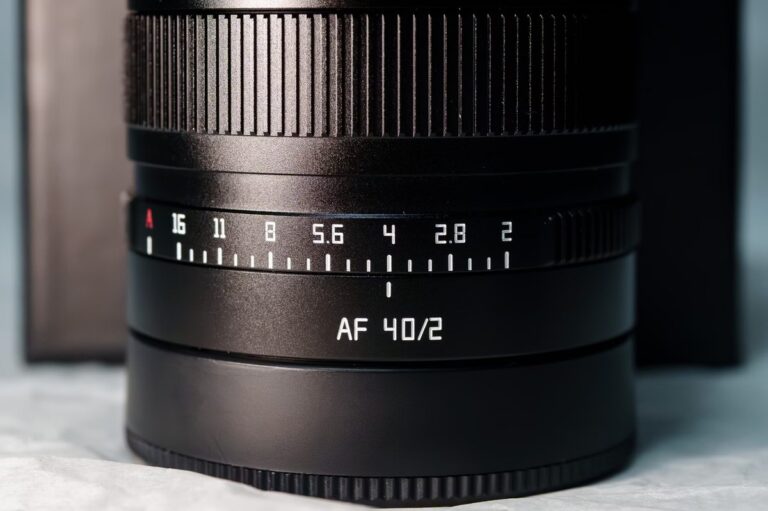
Photo by Prasesh Shiwakoti (Lomash) on Unsplash.