The Precision Content Strategy: Crafting Your Message for the Premium Client
- Sinisa Zec Studio
- No Comments
- Graphic Design, The Design Business
That advice is why you’re burning out, posting work that gets likes from peers but never lands a project worth a damn. It’s time to stop playing the volume game and start playing the value game. This isn’t about being everywhere; it’s about being somewhere specific, for someone specific.
The Short Answer: A precision content strategy ignores 99% of the market to focus exclusively on the 1% who are your ideal, premium clients. You do this by defining them with ruthless specificity, finding the one or two platforms where they actually listen, and creating content that solves their high-level business problems, not just showing off your portfolio.
Step 1: Define Your Premium Client (By First Defining Who You’ll Fire)
Forget the standard marketing persona worksheet. You know, the one that asks for their favorite hobbies and what kind of car they drive. It’s mostly useless. We need to get tactical. The fastest way to define your ideal client is to define the clients you can’t stand working with.
Get out a piece of paper. Write down every frustrating client experience you’ve had. The low-ballers. The scope-creepers. The ones who think “exposure” is a currency. The ones who want a champagne brand on a beer budget.
Done? Good. Now, flip it.
Your premium client is the exact opposite of that list. They don’t question your invoices. They respect your expertise. They understand that good design is an investment, not an expense. They have a real business problem they need a specialist to solve, and they have the budget to do it right.
Let’s get more specific. My premium clients are often startups in product manufacturing. They need a full brand identity that works from the digital shelf all the way to a physical box on a store shelf. They aren’t looking for a cheap logo; they’re looking for a strategic partner.
Your turn. Go beyond demographics. Think psychographics and financial reality:
- What is their minimum project budget? If you don’t know, you’re flying blind.
- What specific, expensive problem do they have? (e.g., “Our user interface is so confusing we’re losing customers,” not “We need a new website.”)
- What is their professional role? Are you selling to a Marketing Director, a CEO, a founder? Each one cares about different metrics.
- What proves your value to them? Is it ROI, increased conversions, a faster production timeline?
Until you can answer these questions, any content you create is just a shot in the dark.
Step 2: The Platform Audit: Find Their Signal in the Noise
Here’s one of my strongest opinions: the social media grind is killing creativity. We’re told to be on Instagram, TikTok, X, Facebook, LinkedIn… it’s a full-time job that pulls us away from the actual work. It’s a performance. And it’s a lie.
Your premium client is almost certainly not finding their lead brand strategist on TikTok.
Your job isn’t to be everywhere. It’s to be in the *one* place your ideal client goes to when they are in a professional mindset. This requires an honest audit.
- For B2B / Corporate Clients: This is almost always LinkedIn. Not for posting motivational quotes, but for sharing insightful articles, detailed case studies, and strategic thoughts on their industry.
- For Creative Directors / Agencies: Behance, Dribbble, and curated portfolio sites. They are looking for craft, period.
- For Direct-to-Founder / Startup Clients: Often, this is a high-value email newsletter or direct, strategic outreach. They are too busy for social media noise but will read something that directly addresses their business pain points.
Pick one, maybe two, platforms and go deep. Ignore the rest. I spent the better part of a year early in my career chasing engagement on Instagram. I posted daily, optimized hashtags, the whole routine. The result? A lot of likes from other designers and photographers, and exactly zero high-value clients. It was a complete waste of time because the people with the real budgets weren’t there to hire. They were on LinkedIn, reading about business strategy. That mistake cost me months of productive time I could have spent building two or three detailed case studies that would have actually landed work.
Step 3: Tailor the Message: From Portfolio to Problem-Solver
Premium clients don’t hire you for pretty pictures. They hire you to solve a business problem. Your content needs to reflect that shift in thinking. Stop saying, “Look what I made,” and start showing, “Here’s the problem I solved and the result it generated.”
This is where my time in the print shop really hammered the lesson home. A beautiful design that couldn’t be printed correctly was worthless. It didn’t solve the client’s problem. The same is true for your content. A beautiful portfolio piece without context is just art. A beautiful portfolio piece wrapped in a case study that explains the client’s challenge, your strategic solution, and the measurable business outcome is a client-acquisition machine.
Your content pillars should be:
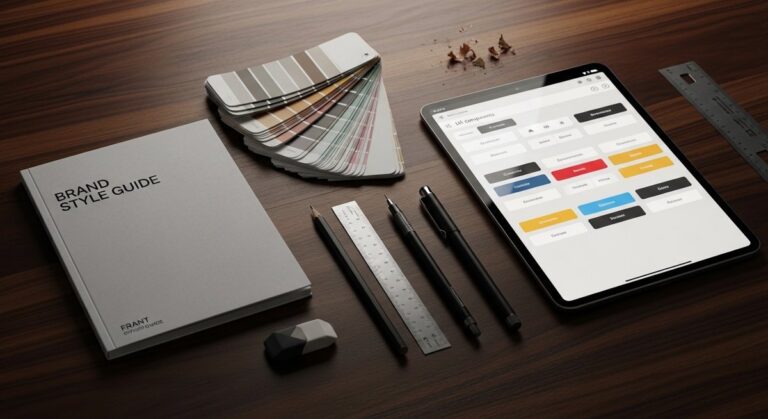
- Case Studies: The absolute gold standard. Detail a project from start to finish. The initial brief, the strategic hurdles, your design process (I use Figma for UI/UX wireframing, Illustrator for identity work), and most importantly, the *results*. Did sales increase? Did user engagement go up? Use real metrics. If you need a polished way to present this work, a good mockup can make all the difference. We offer a Stationery Branding and Identity mockup that’s perfect for showing the full scope of a brand system.
- Authoritative Articles/Tutorials: Write about a specific, high-level problem your premium client faces. If you’re a UI/UX designer, don’t write “5 Tips for Better Buttons.” Write “How to Overhaul a Legacy Checkout Flow to Reduce Cart Abandonment by 20%.” See the difference? One is for junior designers. The other is for a Head of Product with a budget. You can find excellent data on user behavior from sources like the Nielsen Norman Group to back up your points.
- Opinionated Pieces: Premium clients want to hire experts with a strong point of view. Don’t be afraid to take a stand. I’m constantly talking about how the trend of soulless minimalism is making brands forgettable. That opinion resonates with founders who want their brand to have a personality, and it repels those who want a generic, copy-paste solution. That’s exactly what I want.
Your goal with every single piece of content is to make your ideal client think, “This person understands my exact problem.” When you achieve that, the conversation is no longer about your hourly rate. It’s about the value you can create.
What Actually Matters
- Specificity Wins. A vague message attracts a vague (and usually broke) audience. Be ruthless in defining who you want to work with—and who you don’t.
- Depth Over Width. Master one or two platforms where your clients actually are, instead of being mediocre on ten. The algorithm doesn’t sign checks.
- Solve Problems, Don’t Just Show Pictures. Frame your work around the business challenges you solve. Results, strategy, and process are what premium clients pay for.
Stop creating content and start creating conversations. Focus your message, respect your own time, and you’ll start attracting the clients who respect your work enough to pay for it properly.
Frequently Asked Questions
How much content do I need to create to attract premium clients?
Far less than you think. One incredibly detailed case study or one deeply insightful article per month is infinitely more valuable than 30 low-effort social media posts. It’s about quality and precision, not volume.
What if I’m just starting out and don’t have premium clients for case studies?
Create a detailed conceptual project. Invent a brand that fits your ideal client profile and build out a full case study as if it were a real project. It demonstrates your strategic thinking, which is what they’re buying.
Should I list my prices in my content?
I don’t. Premium projects are complex and require custom quotes. Instead of a price, your content should scream ‘value.’ You can, however, state a ‘projects starting at $X’ to pre-qualify leads and filter out clients who can’t afford you.
Is a blog or a newsletter better for this strategy?
A newsletter is generally better. It’s a direct, intimate channel to an audience that has actively opted in. A blog relies on SEO and discovery, which can be a much slower, less targeted game.