7Artisans' Ultralight AF Trio for Nikon Z APS-C: Are These Budget Primes a Game-Changer for Solo Creatives, Or Just More Compromise in 2026?
- Sinisa Zec Studio
- No Comments
- Gear & Equipment, Photography
I’ve been in this industry for over 15 years, and if there’s one constant, it’s the endless parade of ‘revolutionary’ budget gear. Most of it is just noise. Gear obsession is a disease in photography; I’ve always said that light, angle, and composition are what make an image, not the logo on the lens. Still, the promise of a lightweight, affordable, and fast autofocus prime trio is tempting, especially for solo creatives running lean operations.
The Short Answer: This 7Artisans AF trio offers compelling value for hobbyists and content creators on a tight budget, but for demanding professional work, the compromises in build quality and optical performance are likely a deal-breaker.
So, when 7Artisans dropped their 25mm, 35mm, and 50mm f/1.8 autofocus ‘Lite’ series for Nikon’s Z-mount crop-sensor cameras, the question is the same as always: is this a genuine tool, or is it a toy? Let’s break down the specs.
The Allure of the Holy Trinity (On a Budget)
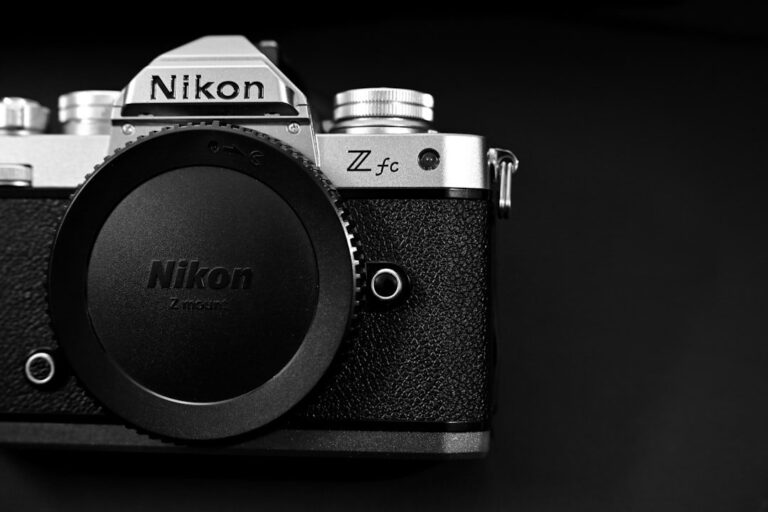
For photographers using cameras like my Nikon Z50 or the popular Zfc, the native lens options have always been solid but a little sparse, especially in the affordable prime department. This trio from 7Artisans fills that gap. The focal lengths are smart: classic full-frame equivalents of roughly 37.5mm, 52.5mm, and 75mm.
That’s your walk-around environmental lens, your ‘nifty fifty’ standard, and your classic portrait lens. And at a price of around $125 each or $359 for the set, it’s an incredibly low price for three f/1.8 primes. The ‘ultralight’ claim isn’t exaggeration, either; at around 180g each, you could carry all three without feeling it. This is a huge plus for the solo shooter who has to carry their own kit all day.
Where Compromise Becomes a Problem
But I didn’t get my start on a print shop floor to be naive about manufacturing. A low price and low weight always come from somewhere. While I haven’t held these specific lenses, my experience tells me exactly where to look for the trade-offs.
First, autofocus. 7Artisans is relatively new to the AF game compared to giants like Sigma or Tamron. They use STM stepping motors, which are typically quiet and smooth for video, but they rarely match the tenacious speed and tracking accuracy of Nikon’s native lenses. For a studio portrait, it’s probably fine. For a fast-moving event or unpredictable subject? I’d have my doubts. I’ve made the mistake of trusting a slow AF system on a critical shot before, and it’s not one you make twice.
Second, optical quality. The biggest sin of cheap, fast lenses is performance wide open. They sell you on that f/1.8 aperture, but shooting at that setting often yields soft images, heavy vignetting, and chromatic aberration. A recent review of the 25mm noted that corner sharpness is an issue until you stop down to f/4 or f/5.6. My Sigma Art primes are tack-sharp edge-to-edge at f/1.4. That’s what you pay for. An image that has to be blown up for a client’s display—something I design layouts for all the time, from posters to billboard mockups—needs to be critically sharp. Soft corners are a non-starter.
And finally, the build. While some reports mention a metal body, these are not weather-sealed, rugged professional tools. They won’t survive the abuse that my Nikon bodies and pro-grade lenses are built to withstand. For a hobbyist shooting in fair weather, that’s an acceptable compromise. For a working pro who can’t cancel a shoot because of a little rain, it’s a liability.
Technical Specifications
Note how similar the physical dimensions are, which is a thoughtful touch for video shooters using gimbals or other balanced rigs.
| Specification | 7Artisans AF 25mm f/1.8 | 7Artisans AF 35mm f/1.8 | 7Artisans AF 50mm f/1.8 |
|---|---|---|---|
| Mount | Nikon Z | Nikon Z | Nikon Z |
| Format | APS-C / DX | APS-C / DX | APS-C / DX |
| Full-Frame Equivalent | ~37.5mm | ~52.5mm | ~75mm |
| Aperture Range | f/1.8 – f/16 | f/1.8 – f/16 | f/1.8 – f/16 |
| Diaphragm Blades | 9 | 9 | 11 |
| Filter Size | 58mm | 58mm | 58mm |
| Minimum Focus | 0.25m / 9.8″ | Unconfirmed | Unconfirmed |
| Weight | ~183g / 6.5 oz | ~180g / 6.3 oz | ~180g / 6.3 oz |
| Dimensions (ø x L) | 67mm x 51mm | 67mm x 51mm | 67mm x 51mm |
| Other | USB-C Port for Firmware Updates | ||
So, Who Should Buy These?
These lenses are not for me. They are not for the professional photographer who needs absolute reliability, blistering autofocus, and flawless optical performance for paid client work. I’ll be sticking with my Nikon Z6 III and my collection of Sigma primes.
But they *are* for the aspiring creative, the YouTuber, the vlogger, or the passionate hobbyist who wants to experiment with prime lenses and shallow depth of field without spending a fortune. For the price of one native Nikon Z lens, you can get all three of these. That’s an incredible value. It’s a fantastic way to learn composition with different focal lengths and to understand the power of a fast aperture.
This trio is a gateway. It’s a tool for learning and creating content where ‘good enough’ is genuinely good enough. It’s for the solo creator who values portability and price above all else. For that person, this isn’t a compromise; it’s an opportunity.
Check Current Prices & Availability
Seriously considering these? Check current retail stock and pricing through the links below:
My Verdict
- A Tool for a Specific Job: These lenses are for budget-conscious creators. They offer creative potential (fast aperture, prime focal lengths) at a price that makes them accessible. That’s their purpose.
- Manage Your Expectations: Do not buy these expecting them to perform like lenses costing 5-10x more. The laws of physics and economics are undefeated. Expect optical quirks and good-but-not-great autofocus.
- Craft Over Gear, Always: If you’re just starting out, buying these three lenses and spending a year mastering light and composition with them will make you a far better photographer than someone who buys a pro lens and leaves it on a shelf. The tool never replaces the artist.
Photo by Shahabudin Ibragimov on Unsplash.
Frequently Asked Questions
Is the autofocus on these 7Artisans lenses as good as Nikon’s native lenses?
Almost certainly not. Expect it to be functional for general use like portraits and vlogging, but it will likely be slower and less reliable for fast-moving subjects compared to Nikon’s own lenses.
Are these 7Artisans lenses weather-sealed?
It’s extremely unlikely at this price point. A review of the 25mm noted a rubber gasket around the mount, but you should treat these as fair-weather lenses, not tools for rugged professional environments.
Should I buy this trio or the Nikon Z DX 16-50mm kit lens?
If you absolutely need the f/1.8 aperture for low light and background blur, this prime trio is the budget-friendly way to get it. If you need travel-friendly versatility and convenience above all else, the 16-50mm kit lens is still the more practical choice.