Beyond the Broad Strokes: Pinpointing Your Premium Audience for Impactful Content
- Sinisa Zec Studio
- No Comments
- Graphic Design, The Design Business
I spent too many of my early years creating content I thought was cool, only to attract other creatives who loved the work but had zero budget. It’s a classic, painful mistake. You get stuck in a loop of vanity metrics and peer approval instead of building a real business.
The Short Answer: Pinpointing your premium audience requires moving beyond simple demographics to deeply understand their specific business pains, professional aspirations, and hidden fears. Your content must become the direct answer to their most pressing, high-stakes questions.
The internet tells you to be everywhere, to feed the algorithm, to churn out content until your fingers bleed. This is a lie. This fast-paced, no-attention culture is a trap designed to burn you out. It forces you to spend 90% of your time performing instead of creating. I refuse to play that game. My goal isn’t to be popular; it’s to be indispensable to a select few.
This isn’t about creating a generic “customer avatar” with a cute name and a list of hobbies. This is a strategic exercise in identifying and connecting with the people who see the true value in your craft and have the budget to pay for it. Let’s get to work.
Step 1: The Anti-Persona — Define Who You Don’t Want
Before you can find the right client, you must first exorcise the wrong ones. This is the most cathartic step. Be ruthless. Who are the clients who drain your energy, nickel-and-dime every invoice, and ghost you when it’s time to pay?
Grab a piece of paper and list the red flags from your past projects. Things like:
- Clients who say, “I just need something quick and cheap.”
- People who want endless revisions without a clear direction.
- Anyone who asks for spec work or promises “great exposure.”
- Businesses with no respect for your process or timeline.
This isn’t about being negative. It’s about building a filter. Every piece of content you create should be designed to attract the opposite of this list.
Step 2: The Revenue Autopsy — Analyze Your Best Clients
Now for the positive side. Look back at your client history. Identify the top 20% of clients who generated 80% of your revenue or, just as important, 80% of your professional satisfaction. These are your gold standard.
Don’t just list their names. Dig deeper. Ask yourself:
- What industry were they in? (e.g., tech startups, luxury CPG, established professional services)
- What was the specific, high-stakes problem they hired me to solve? (e.g., “Our new product launch needs to look premium,” or “Our website is confusing users and costing us sales.”)
- What was their mindset? Were they decisive? Did they trust my expertise?
- How did they find me? Was it a specific referral? A piece of content I created?
Patterns will emerge. You might discover your best clients are all Series A startups needing to establish brand legitimacy, or established e-commerce brands needing to overhaul their product photography. This is your starting point.
Step 3: From Demographics to Psychographics
This is where we leave the broad strokes behind. Age, gender, and location are mostly useless for defining a premium client. What matters is what’s going on inside their head. Psychographics are about mindset and motivation.
Focus on these three areas for your ideal client:
- Their Pains: What are the specific, costly problems that keep them up at night? Think in terms of business outcomes. Not “they need a new logo,” but “they’re losing market share to a competitor with a stronger brand presence.” Not “they need new photos,” but “their low-quality product images are killing their conversion rates.”
- Their Gains: What does the ultimate victory look like for them? What is the transformation they are paying for? This is the ‘after’ state. “A brand that justifies a price increase.” “A website that customers rave about.” “A product launch that sells out in 24 hours.”
- Their Watering Holes: Where do these people actually seek information to solve their high-stakes problems? Forget generic platforms. Do they read industry-specific trade publications? Are they active in a particular LinkedIn group? Do they follow certain thought leaders? Your content needs to be there, not just blasted across Instagram.
Step 4: Create a Problem-Centric Content Matrix
Now, turn this research into an action plan. Don’t just start writing. Build a simple matrix to guide every piece of content you create. It’s a tool I use to stay focused.
The columns are:
- Client’s High-Stakes Problem: (e.g., “Our new SaaS product has a powerful backend, but the UI looks dated and untrustworthy.”)
- My Specific Solution/Value: (e.g., “I design intuitive, clean UI/UX that builds user confidence and reduces churn.”)
- Targeted Content Idea: (e.g., “A case study titled ‘How We Redesigned [Client Name]’s UI and Increased User Engagement by 40%.’ This could be a blog post, a video, or a PDF download.”)
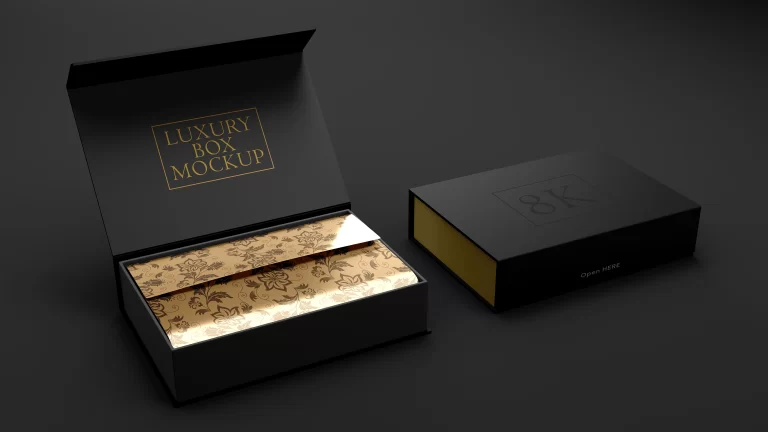
See how that works? The content isn’t about you; it’s a direct, compelling answer to a burning problem your ideal client has *right now*. If their problem is launching a new physical product, a piece of content demonstrating your expertise could be a case study using a high-quality mockup to show the final vision, like this Luxury Box Mockup Template.
Step 5: Speak Their Language, Not Yours
As creatives, we love to talk about our craft. We talk about typography, color theory, f-stops, and lighting setups. Your premium client does not care.
They care about the result. The outcome. The solution to their pain.
Instead of saying: “I use a Sigma 105mm f/2.8 Macro lens with a three-point Godox AD400Pro lighting setup to capture detailed product shots.”
You say: “We create product photos so sharp and clear that your customers can see the fine stitching, which builds trust and justifies a premium price point.”
My years in the print shop taught me this discipline. The client didn’t care about the CMYK values or the plate alignment; they cared that the final brochure looked exactly as promised and was delivered on time. The process is your domain; the result is theirs. Frame everything—your website copy, your proposals, your content—around the results you deliver for them.
The Bottom Line
- Stop Selling, Start Solving. Your premium audience isn’t a demographic; it’s a specific set of high-stakes business problems you are uniquely qualified to solve. Your content must prove that.
- Your Peers Are Not Your Clients. Stop creating content to impress other designers or photographers. Create it for the person who signs the check. Their concerns are about ROI, market position, and customer perception.
- Specificity is Your Superpower. The more precisely you define your audience, the louder your message will resonate. Being for everyone means being for no one. Choose your small pond and become the big fish.
Photo by TheRegisti on Unsplash.
Frequently Asked Questions
How specific is ‘too’ specific? Won’t I alienate potential clients by niching down so much?
That’s the entire point. You want to alienate the clients who aren’t a good fit. True premium positioning means being the obvious choice for a select few, not a possible option for many. The fear of missing out is what keeps most freelancers broke.
What if I’m just starting out and don’t have ‘best past clients’ to analyze?
Then you work forward. Instead of analyzing who you *have* worked with, define who you *want* to work with. Research companies and brands you admire that fit the budget and project type you’re aiming for, and build your ideal profile based on them.
How often should I review and refine this audience profile?
Do a deep dive once a year, or whenever you feel a major shift in your business goals. But you should be thinking about it with every new client inquiry. Each interaction is a data point that either confirms or challenges your definition.