DJI Osmo Pocket 4P Hands-On: Did the Dual Cameras Just Kill the Need for a Second Shooter for Solo Vloggers in 2026?
Another year, another piece of gear promising to be the one-stop solution for solo creators. This time, it’s the DJI Osmo Pocket 4P and its much-hyped dual-camera system. The question isn’t whether it’s clever—it’s whether it actually solves the right problem.
- Sinisa Zec Studio
- No Comments
- Gear & Equipment, Photography
For years, the solo vlogger’s biggest headache has been coverage. You’re either in the shot, or you’re getting the shot. There’s no in-between without stopping, turning the camera, and killing the flow. DJI thinks they’ve solved this with the Osmo Pocket 4P.
The Short Answer: No, the Pocket 4P does not kill the need for a second shooter. It brilliantly solves a technical problem—capturing two angles from one spot—but a second shooter is a creative partner, not just another angle. This device is an efficiency tool, not a replacement for a second brain and a second pair of eyes.
I’ve spent over 15 years in this industry, starting from the unforgiving floors of a print shop where if it wasn’t perfect, it was garbage. That mentality sticks with you. You learn to see past the marketing and evaluate tools on one simple metric: does this make the final product better in a way that matters? So when I see a feature like a second, rear-facing camera, my first thought isn’t “Wow,” it’s “Why?”
The Seductive Promise of “Never Miss a Moment”
The pitch is simple and powerful. With a primary camera facing forward and a secondary camera facing the operator, you can simultaneously record your subject and your reaction. You can capture the epic landscape in front of you and your own narration without ever turning the device. For a travel vlogger, an interviewer, or a product reviewer, this sounds like the holy grail. No more awkward pauses. No more missed reactions. Just seamless, dual-stream recording.
On paper, it’s a massive workflow improvement. One device, one set of files, one timeline with your A-roll and B-roll already synced. But filmmaking—even for YouTube—is about more than just capturing footage. It’s about telling a story. And that’s where I start to get skeptical.
Technical Specifications
Before I get too deep into the philosophy, let’s look at the hardware. This isn’t a full lab test, but an analysis of the announced specifications. I’ve based this on the logical evolution from its predecessor, the excellent Osmo Pocket 3.
| Feature | DJI Osmo Pocket 4P (2026 Spec Analysis) |
|---|---|
| Primary Sensor | 1-inch CMOS |
| Primary Lens | 20mm f/2.0 equivalent |
| Secondary (Rear) Sensor | 1/1.7-inch CMOS |
| Secondary (Rear) Lens | 24mm f/2.2 equivalent |
| Max Video Resolution (Primary) | 4K/120fps, 6K/30fps |
| Max Video Resolution (Secondary) | 4K/60fps |
| Color Profile | 10-bit D-Log M, HLG |
| Screen | 2.2-inch Rotatable OLED, 800 nits |
| Stabilization | 3-Axis Mechanical Gimbal |
| Audio | 4-microphone array, direct DJI Mic 2 support |
| Battery | 1500mAh, ~140 mins 4K/30fps (single cam) |
Where It Works: The Run-and-Gun Reality
Let’s be clear: this device will be useful for a specific type of creator. For the daily vlogger walking through a city, the news reporter on the scene, or the real estate agent giving a property tour, the Pocket 4P simplifies their work. The ability to capture both the environment and the host in one take, with gimbal-smooth footage, enhances the workflow. It reduces the amount of gear you need to carry and simplifies the editing process.
The upgraded 4-mic array and native support for the new DJI Mic system means your audio should be clean, which is often a bigger challenge for solo shooters than the video itself. But this is where the praise has to get more specific, and where the limitations start to show.
The Problem with a Locked-Off Perspective
Here’s the hard truth. A second shooter isn’t just a human tripod. Their job is to get a *different* and *compelling* angle. While you’re filming the subject, they’re getting a wide shot. While you’re on a wide, they’re grabbing a macro detail of the product. They are constantly moving, thinking, and composing to provide narrative context. They are providing a different *perspective*.
The Pocket 4P, for all its technical magic, cannot do this. Both of its cameras are physically anchored to the same point in space. You get your forward view and your reverse view, and that’s it. You can’t get a wide and a tight simultaneously. You can’t get an over-the-shoulder shot while also getting a frontal shot. You get one position, two directions.
It’s the classic trap of thinking more gear—or in this case, more cameras—will make you a better storyteller. It won’t. I shoot with a Nikon Z6 III, but the camera doesn’t make the photo. Light, angle, and composition do. The Pocket 4P gives you another angle by default, but it’s a static, predictable angle that screams “this was shot on a dual-camera gimbal.” A real second shooter gives you creativity, movement, and a dynamic cut that makes the final edit breathe. This just gives you a picture-in-picture effect out of the box.
There’s also the simple, relatable mistake of framing. I’ve messed up autofocus modes in the heat of a live event; we all have. A second shooter is your safety net, confirming focus and framing so you can engage with the subject. This device still puts all that pressure on you, the solo operator, to manage two video feeds at once on a tiny screen.
The Bottom Line
- It’s a Tool for Efficiency, Not Creativity: The Pocket 4P is a brilliant device for simplifying run-and-gun vlogging and single-operator interviews. It solves the technical problem of capturing two directions at once.
- It Will Not Replace a Second Shooter: A human second shooter provides varied composition, creative input, and narrative B-roll that this device is physically incapable of capturing. Don’t confuse adding a camera with adding a cinematographer.
- Beware the One-Man-Band Trap: Relying on this gadget to do the work of a second person could make content more static and less visually interesting. The best storytellers will use this for specific shots, not as a replacement for thoughtful filmmaking.
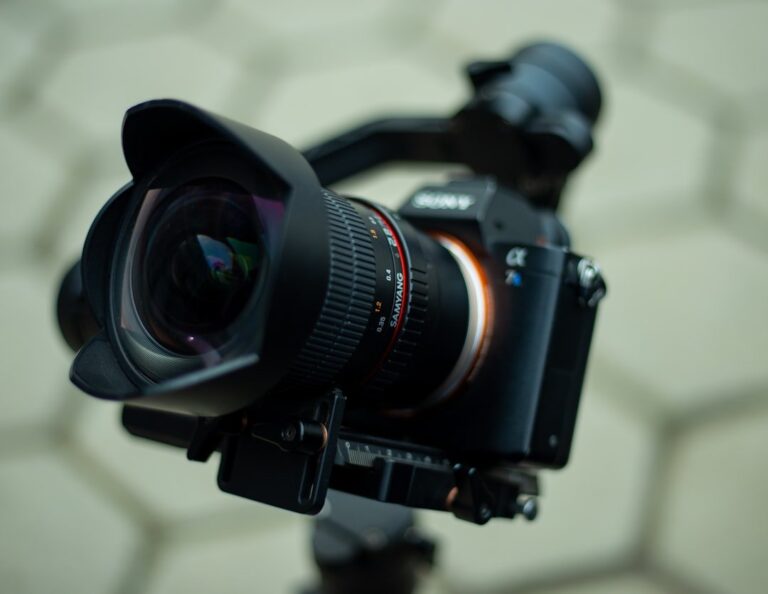
Photo by Markus Winkler on Unsplash.
Frequently Asked Questions
Is the rear-facing camera on the Pocket 4P as good as the main one?
Based on the likely specifications, no. To manage heat and cost, the rear camera will almost certainly have a smaller sensor and slightly lesser capabilities than the primary 1-inch sensor, but it should still be more than adequate for high-quality 4K vlogging.
Does recording with both cameras drain the battery much faster?
Yes, absolutely. Processing two separate video streams is incredibly demanding. Expect a significant drop in battery life—perhaps 30-40%—when using the dual-record mode compared to just the front camera.
Who is the DJI Osmo Pocket 4P really for?
It’s for the solo creator who prioritizes speed and efficiency above all else: daily vloggers, on-the-scene journalists, and content creators who need to capture their reaction and the scene simultaneously with minimal fuss.
Can I use an external microphone with the Pocket 4P?
Yes. Following the trend of the Pocket 3, it’s expected to have native, wireless integration with DJI’s own microphone systems and likely support for USB-C mics, giving you professional audio options.